The French regulatory framework surrounding early childhood development has shifted in recent months, with concrete measures regarding the sensory environment of young children. These changes alter what it practically means to support a child’s well-being on a daily basis. They shift the question of “best practices” towards measurable obligations, particularly in childcare settings.
Screens before age 3: what the French regulation changes since 2025
Since January 2025, the health booklet provided at each birth in France explicitly includes the mention “before age 3, screen exposure is not recommended, including as background noise”. This is no longer a piece of advice shared by pediatricians on social media; it is an official guideline printed in each child’s medical follow-up document.
The next step arrived in July 2025: the ban on screens for children under 3 years old, including in the background, became a regulatory obligation in nurseries and with childminders. This measure is enacted through a decree modifying the national charter for early childhood care.
The nuance that deserves attention concerns “background noise.” Many households leave a television on without anyone watching it. This practice, long considered harmless, now falls within the scope of official recommendations. For parents who care for children at home in a professional setting, this is a constraint to integrate into the daily organization.

Families looking for age-appropriate activities can explore the Un P’tit Air de Famille website for children, which offers concrete guidelines on developmental milestones.
Screen-free sensory awakening: what alternatives hold up
Removing screens is not enough if the auditory and visual environment remains saturated. The question becomes: what can replace this constant background, and how can we structure awakening times that respect the child’s rhythm without falling into an excess of activities.
Three approaches stand out for their simplicity and grounding in feedback from early childhood professionals:
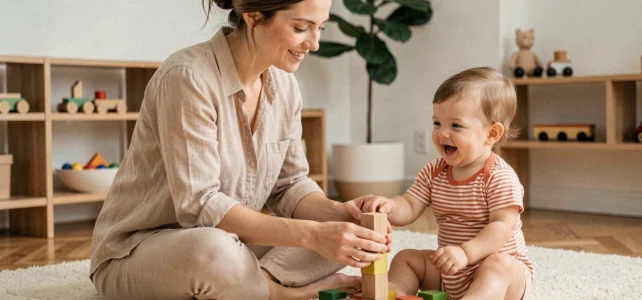
- Free play with everyday objects (wooden spoons, stacking boxes, fabrics of different textures) remains the foundation of sensory awakening before age 3. The child manipulates, tests resistance, and explores the sounds produced by each material.
- Deliberate silence periods, where the adult does not intervene and no sound source is active, allow the child to develop their auditory attention. It is in these moments that they notice external noises, their own breathing, and the sound of their movements.
- Access to an outdoor space, even if small (secured balcony, yard, nearby park), provides a natural sensory stimulation that the most elaborate toys cannot replicate: variations in light, textures of the ground, changing smells.
The alternation between stimulation and calm structures the day better than a succession of workshops. Nursery professionals observe that children exposed to regular calm periods show fewer signs of agitation at the end of the day.
The trap of well-intentioned overstimulation
A common reflex is to multiply directed activities to compensate for the absence of screens. Painting workshops, music, motor skills, reading: the day turns into a timed program. Field feedback varies on this point, but several early childhood educators warn that an overly dense schedule produces the opposite of the desired effect.
A child who never has time to be bored does not learn to initiate an activity on their own. Boredom, in a safe environment, triggers creativity and autonomy much more effectively than a succession of workshops prepared by adults.
Traffic noise and emotional development: an underestimated factor
The child’s auditory environment is not limited to screens. A study reported by The Lancet highlighted that traffic noise hinders children’s emotional development, while disturbances from trains or planes do not have the same effect. The specificity of traffic noise lies in its continuous and unpredictable nature, which maintains a constant level of alertness in young children.
For families living near busy roads, this information invites a rethink of living space arrangements. Placing the play and sleep area towards the yard rather than the street, using thick curtains or double glazing: these adjustments are common sense, but they take on a different significance when we know that the impact affects emotional development and not just comfort.
What parents can assess at home
Measuring the noise level in a room does not require expensive equipment. Several free sound meter apps provide a reliable indication of ambient noise. A play area below 40 decibels promotes concentration and calm exploration.
Beyond volume, it is the consistency of the noise that matters. A constant and predictable sound (fan, natural white noise) is less disruptive than an irregular background noise where honks, accelerations, and braking mix.

Child well-being: what the WHO recommendations establish as a foundation
The WHO guidelines on physical activity, sedentary behavior, and sleep for children under 5 provide a reference framework rarely cited in mainstream articles on awakening. The time spent strapped in a stroller or car seat should not exceed one consecutive hour for children aged 1 to 4, according to these recommendations.
This guideline poses a direct practical constraint for daily travel. Car trips to and from daycare followed by a stroller run at the supermarket can easily exceed this threshold without parents being aware.
The WHO also emphasizes the quality of sleep as a pillar of well-being, with recommended durations varying by age but systematically including naps. A child aged 1 to 2 years needs one to two naps per day for the total sleep over 24 hours to reach the recommended level.
The awakening and well-being of a child depend less on the choice of toys or activities than on the quality of their overall sensory environment. Ambient noise, quiet time, duration of immobility in a seat: these discreet parameters shape daily life far more than any educational program.