
We’ve all experienced that moment: standing in a living room, a paint sample in hand, unable to know if the result will match the existing sofa. Mobile decoration apps change this frustrating step by offering direct visualization on the phone screen, using just a simple photo of the room. However, there remains a significant gap between gimmicky tools and those that save time on a real design project.
Photographing a room and obtaining a usable plan: what the tool really does
The starting point is always the photo. You take a picture of your living room, bedroom, or kitchen, and the app generates a layout proposal. Some tools go further by producing a 2D or 3D plan from this image, allowing you to test furniture configurations before making any purchases.
The difference with a simple Pinterest moodboard is the operational dimension. You’re not just collecting inspiring images; you test a layout on your own walls. The actual space, with its constraints (poorly placed window, bulky radiator, low ceiling), becomes the playground.
On this point, you can explore the mobile app Raffinement-et-Habitat.fr for decoration, which details a concrete method for rethinking an interior step by step from your phone.
Feedback varies on the accuracy of automatic measurements depending on the apps. Some overestimate the depth of a room when the angle of the shot is too tight. The reflex to adopt is to photograph from a corner of the room, at chest height, to limit distortions.

Combining multiple AI tools for a complete decor project
Professional interior designers no longer limit themselves to a single app. The current workflow involves chaining several specialized tools to cover all stages of a decoration project.
- An AI image generator (like Midjourney) to create atmospheres and visual concepts from a text description, even before touching existing furniture.
- A photo transformation tool like Interior AI or RoomGPT, which takes a real snapshot and offers several design variations applied to the photographed room.
- A planner like Planner 5D to convert the chosen vision into a usable 2D/3D layout plan, with dimensions and proportions that can be used by a craftsman.
This chained approach produces results that are much more reliable than a single tool that tries to do everything. You move from vague inspiration to a measurable action plan in three distinct steps.
What it changes for an individual
You don’t need to be a professional decorator to reproduce this method. The idea is to separate the phases: first explore styles (with a generative AI tool), then confront these ideas with your actual room (using a photo transformation tool), and finally validate the dimensions before ordering anything.
The classic trap is to jump straight to purchase after seeing an appealing rendering on screen. A sofa that looks perfect in a simulation might block traffic in a hallway. Always check the dimensions on a plan before confirming an order.
Decor features that make a difference on the ground
All interior decoration apps offer style filters. That’s not where the value lies. The features that really matter are those that address concrete layout problems.
Color testing on your own walls
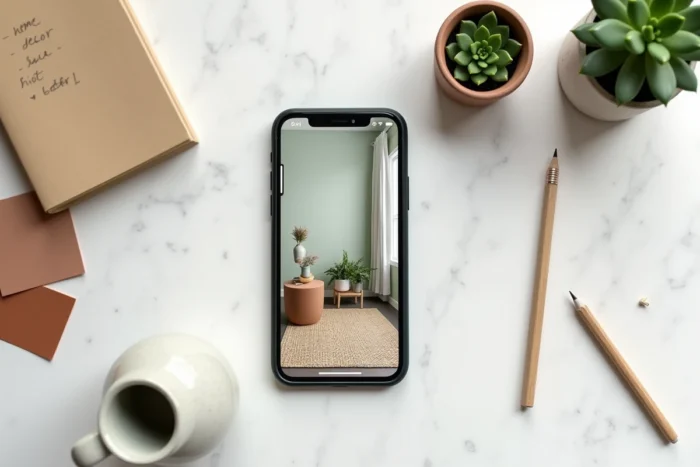
Some apps allow you to project a paint shade directly onto a photo of your wall, taking into account the natural light captured. This is more reliable than a paper color chart because the perception of a color changes radically depending on the room’s orientation and the type of lighting.
It’s recommended to test at two different times of the day: in natural morning light and in artificial evening lighting. Apps that manage this parameter avoid the unpleasant surprise of “gray leaning towards purple” once the work is completed.
Augmented reality for furniture
Placing a virtual piece of furniture in your room via your phone’s camera remains the most spectacular feature. However, its real usefulness depends on the quality of the catalog offered. An app with thousands of generic furniture pieces is less helpful than a tool connected to real manufacturers’ catalogs, where the dimensions and finishes match what you can buy.
The criterion to check: does the furniture displayed in augmented reality correspond to an existing product reference, with an exact price and dimensions? If so, the tool truly serves the project. Otherwise, you remain in the realm of inspiration, not planning.
Limitations to know before starting a design project
Mobile decoration apps offer a considerable time-saving for exploring ideas and validating color or furniture choices. But they do not replace certain steps.
- AI renderings do not take into account technical constraints (load-bearing walls, passage of electrical conduits, accessibility standards). For structural work, a professional is still necessary.
- The calibration of colors depends on the phone’s screen. A saturated OLED screen will display a shade more vividly than reality. Comparing with a physical sample remains essential.
- AI-generated style suggestions tend to reproduce dominant trends. For an interior that stands out, it’s better to use the tool as a working base, not as a final decision.
A well-managed decoration project alternates between digital exploration and physical verification. The mobile app serves to quickly sort options and eliminate false good ideas. The final choice, however, is always made on-site, sample in hand, in the actual light of the room.