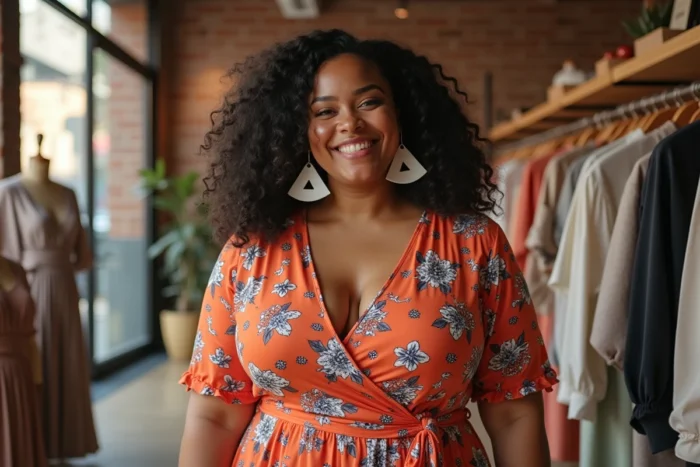
Inclusive fashion encompasses very different realities depending on whether we are talking about sizes, gender, disability, or ethnic representation. Measuring the real progress of the sector requires distinguishing these dimensions and comparing what brands display with what consumers perceive.
Traceability of inclusive practices: what transparency changes for brands
Regulatory pressure is pushing brands to document their value chain in a more readable way. By 2026, this transparency requirement will no longer apply only to materials or production conditions: it will extend to diversity practices in campaigns, castings, and collection design.
This evolution has a concrete effect on creativity. When a brand must justify its representation choices, it can no longer settle for one plus-size model per season to check a box. Casting, sizing, and communication decisions become traceable, altering how creative teams work upstream.
Exploring fashion on Hermaphrodite fr allows us to see how some players integrate this transparency logic directly into their offerings by documenting their design and representation choices.
The accessibility of communication is now treated as a strategic topic in the fashion industry. Shopping journeys, product descriptions, campaign visuals: everything is rethought to be understandable and usable by different audiences. It is no longer an isolated CSR aspect; it is a commercial development axis.
Body diversity and sizing: gap between display and actual offering
One of the most telling indicators concerns the evolution of casting on the runways. Between late 2018 and early 2022, the use of plus-size models for fashion shows increased by 374% according to Tagwalk data. A figure that seems spectacular.
However, the autumn-winter 2023 season did not continue this momentum. And on the consumer side, only 31% of French people identify with the communication of fashion brands. The gap between the showcase and the feeling remains massive.
| Inclusive dimension | Visibility on runways | Consumer perception |
|---|---|---|
| Size diversity | Marked increase since 2018, recent slowdown | Low identification with campaigns |
| Gender fluidity | Gender-neutral collections on the rise | Strong interest among young consumers |
| Ethnic diversity | Progress recognized by the majority of the public | Perceived as the area where brands are making the most progress |
| Adaptive fashion (disability) | Still marginal presence | Growing demand, limited supply |
This table highlights a structural imbalance. Ethnic diversity is the only area where public perception recognizes tangible progress. 72% of French people consider the representation of diversity in advertising important, according to the Kantar x The Good Company study from February 2022. In contrast, expanded sizing remains a blind spot for the majority of brands.
Gender-neutral fashion and creativity: what Generation Z is changing
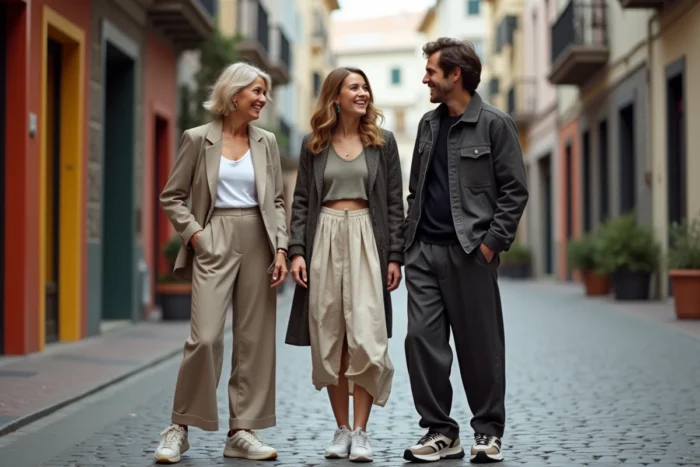
Gender fluidity in clothing is no longer a niche phenomenon. Young consumers, particularly Generation Z, view style as a tool for identity expression rather than a social marker. This shift in perspective forces brands to rethink the very design of their collections.
Concretely, this translates into several evolutions in the industry:
- Ranges designed without distinguishing between men/women from the patronage stage, rather than simply adapting a male model into a female version
- Color palettes and cuts that no longer rely on traditional gender codes (pink/blue, fitted/loose)
- Visual communication that showcases varied bodies and identities without reducing them to a marketing argument
This creative approach is not limited to independent brands. Major retailers are gradually integrating these codes, driven by a demand from young audiences that associates inclusivity with authenticity.
Transparency of creative choices among new brands
Brands emerging in this niche often share a common trait: they document their choices. Why this fabric, why this cut, why this casting. This transparency in the creative process becomes a differentiating factor against historical ready-to-wear players.
78% of the French population believes that brands have made more efforts on diversity in recent years, according to the Kantar x The Good Company study. Perception is improving, but it mainly focuses on the representation of people of different skin colors or backgrounds. Other dimensions of inclusivity remain sidelined in the public’s mind.
Adaptive fashion and professional inclusion: angles still underexploited
Adaptive fashion, designed for people with disabilities, remains the poor relation of inclusivity in clothing. Magnetic closures, side openings, sensory-neutral fabrics: technical solutions exist, but the commercial offering remains marginal in traditional distribution.
Inclusion is not only about the finished product. It also concerns the fashion professions themselves. Professional immersion programs allow audiences typically distanced from the sector (people with disabilities, atypical profiles) to access positions in retail, styling, or logistics. This ground-level inclusion logic, documented particularly in the healthcare sector, is beginning to inspire some retail players.
Criteria for evaluating a truly inclusive brand
- The range of sizes offered (beyond simply adding an XL) and the actual availability of each size in stock
- The diversity of models used in campaigns and on the e-commerce site, not just during fashion shows
- The existence of adaptive pieces in the permanent catalog, not just in limited editions
- The traceability of design and casting practices, publicly accessible
The available data shows an industry in motion, but whose progress is concentrated on the most visible axes. Ethnic diversity is progressing in public perception, gender fluidity is gaining ground among young consumers, while expanded sizing and adaptive fashion remain more of a promise than widespread commercial realities. It is on these last two fronts that the gap between brand discourse and consumer experience remains the most pronounced.