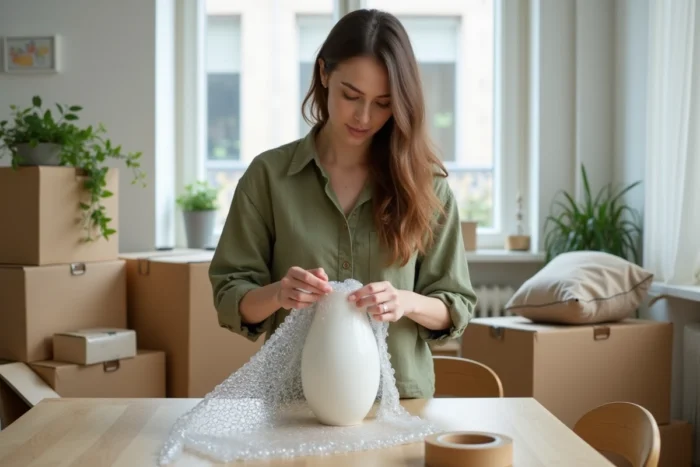
Bubble wrap is a protective material made of two polyethylene films trapping regular air pockets. During a move or when shipping fragile items, it absorbs shocks and limits scratches on dishes, furniture, or electronics. Buying new rolls represents an often underestimated expense, while free sources exist nearby, provided you know where to look and when to ask.
REP system and sorting of professional packaging: what changes for recovery
Since the gradual implementation of the REP professional packaging, companies must better document and direct their boxes, plastic films, and pallets towards identified recovery channels. This obligation concretely alters the availability of recoverable bubble wrap at retailers and warehouses.
Before this regulation, a furniture store or a logistics warehouse would throw away its used bubble wrap in a general waste bin. Today, these materials are subject to stricter sorting. The stock of recoverable bubble wrap has not disappeared, but you now need to contact the right person: the logistics manager or the waste manager of the site, rather than rummaging through an open-access bin.
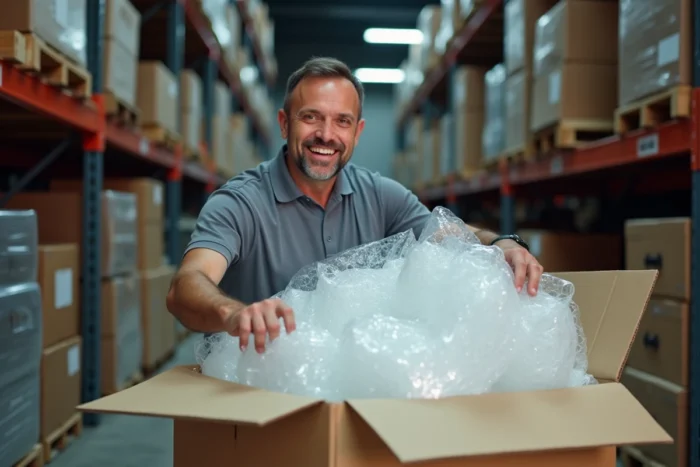
Several field sources confirm that businesses, particularly in appliances, furniture, and IT, accumulate significant amounts of bubble wrap after unpacking their deliveries. By introducing yourself directly and explaining your moving needs, you increase your chances of leaving with packaging materials in good condition. You will also find various tips for finding free bubble wrap that detail these avenues by type of business.
Free bubble wrap in commercial and industrial areas: the most reliable sources
Supermarkets primarily provide boxes, not bubble wrap. For bubble wrap in quantity, you need to target businesses that receive fragile and bulky goods.
Appliance and furniture stores
These stores unpack refrigerators, televisions, and wardrobes daily. The bubble wrap that protected these products is rarely reused by the store itself. Visit in late morning, after deliveries have been received: this is when teams sort their packaging.
Logistics warehouses and business parks
E-commerce distribution platforms and wholesalers generate considerable volumes of bubble wrap. The challenge is identifying these sites, often located on the urban outskirts. Industrial activity zones group several warehouses within a limited perimeter, allowing for effective prospecting in a single visit.
Pharmacies and specialty shops
Pharmacies receive bottles and glass products packaged with small-format bubble wrap. The quantities are smaller, but the quality of the film is often excellent, with intact bubbles. Decoration shops and art galleries also represent underutilized sources.
Online platforms and local groups for recovered bubble wrap
The digital reflex complements physical prospecting. Several channels allow you to spot offers for free bubble wrap without having to search blindly.
- Neighborhood or community Facebook groups (like “Living in [city]”) regularly post announcements from individuals getting rid of packaging materials after a move.
- Object donation platforms between individuals display lots of boxes, bubble wrap, and packing foam, often in mixed lots.
- Forums and discussion threads dedicated to moving on community sites allow you to post a targeted request with your location.
Responsiveness makes the difference: a bubble wrap donation announcement disappears within hours. Activate notifications on local groups to be alerted as soon as a post is made.
Check the quality of recovered bubble wrap before using it
Recovering free bubble wrap does not exempt you from checking it before use. A film with popped or flattened bubbles no longer provides protection. Here are the points to check.
- Press a few bubbles: they should withstand moderate thumb pressure. If they crush easily, the film has lost its cushioning ability.
- Check for tears in the welding areas between the two layers of polyethylene. A tear weakens the entire strip.
- Inspect the cleanliness of the film: bubble wrap stained with grease or moisture can damage fragile items, especially dishes and textiles.
- Prefer medium or large diameter bubbles for heavy items (dishes, small appliances) and small bubbles for electronics and knick-knacks.
A recovered bubble wrap in good condition protects as effectively as a new roll. The performance difference between the two is negligible if the bubbles are intact and the film is clean.
Free alternatives to bubble wrap for protecting your belongings
Bubble wrap is not always available in sufficient quantities. Several substitute materials provide comparable protection for transporting fragile items during a move.
Crumpled newspaper balls fill empty spaces in a box and absorb light shocks. For dishes, wrapping each piece in kraft paper and then cushioning the whole with crumpled newspaper offers a satisfactory level of protection.
Household textiles (towels, sheets, sweaters) serve as natural padding. This method has a double advantage: it protects items and reduces the number of boxes needed to transport the laundry. Socks slipped over stemware are a moving classic for good reason: they conform to the shape and cushion shocks.
Cuttings of corrugated cardboard, recovered from supermarkets, provide a rigidity that bubble wrap does not offer. For frames, mirrors, and paintings, a combination of corrugated cardboard on the surface and fabric for lateral cushioning makes for a robust packaging.
The choice between bubble wrap and alternatives depends on the type of items being transported. For dishes and very fragile knick-knacks, bubble wrap remains the most suitable material due to its cushioning properties. For furniture and bulky items, corrugated cardboard and blankets work just as well, if not better.